Platform Engineering vs DevOps: All you need to know in 2026
At some point, every engineering team has been on the brink of adopting DevOps. Developers find that they spend more time configuring pipelines than coding. More weight is put on on-call rotations. Each new service translates to a new set of tools that no one is familiar with.
There emerged a friction that led to the development of platform engineering. Rather than trying to bring each developer up to speed on "DevOps", a dedicated team builds and maintains the internal tooling, which helps the rest of engineering to move quickly without being bogged down.
This guide will help you understand the fundamentals of DevOps and platform engineering, and help you understand the difference between them, or when a team should have both.
What Is DevOps?
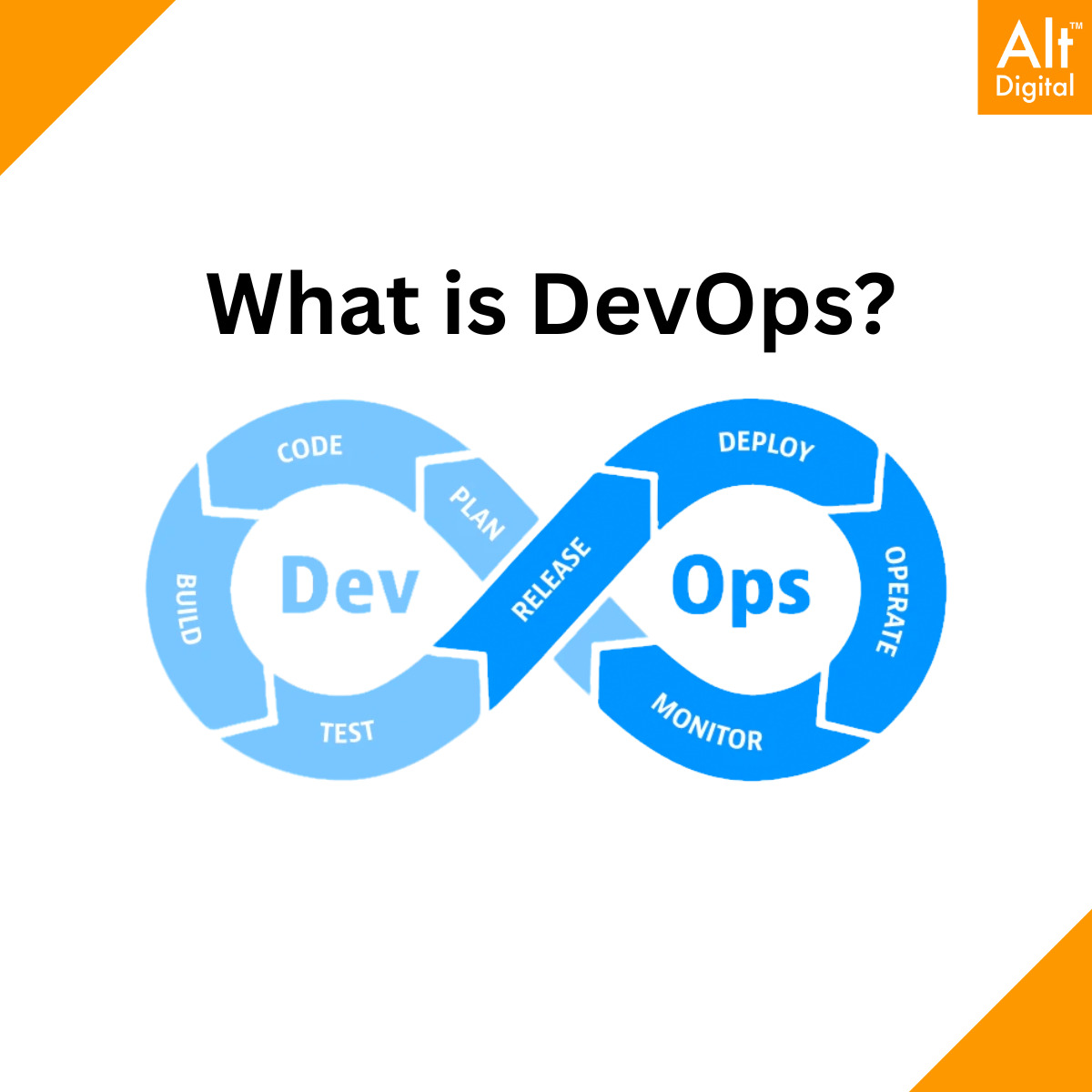
DevOps is a collection of practices that aims to make the deployment, development, and operations process more streamlined and automated by unifying the Software development ( Dev) and IT operations.
DevOps helps bring people, resources, and tools together, resulting in substantial business growth by deploying quick software solutions. Thereby, increasing the efficiency of the development cycle.
DevOps Roles and Responsibilities
DevOps requires a collaborative movement among teams to streamline the deployment and development processes. Harmony among the teams helps adjust to change and try new approaches, which guarantees that high-quality software is delivered and employed regularly.
The roles and responsibilities of DevOps are different for companies of different sizes. For smaller organizations, one person can be the owner of the pipeline to the cloud account. In bigger companies, the job is split into the release engineer, site reliability engineer, infrastructure engineer, and platform engineer.
What Is Platform Engineering?
Platform engineering treats internal developer tooling as a product. Instead of every team building its own pipelines, scripts, and deployment processes, A dedicated platform team builds an internal platform for other developers to build, test, and deploy software, rather than each team developing its own pipelines, scripts, and deployment processes.
It's the duty of the platform engineering team to make the interactions with the platform as frictionless as possible for all others. They hide all the complexity of cloud service infrastructure, compliance, and deployment pipelines behind a set of simple, self-service interfaces.
The Role of a Platform Engineering Team
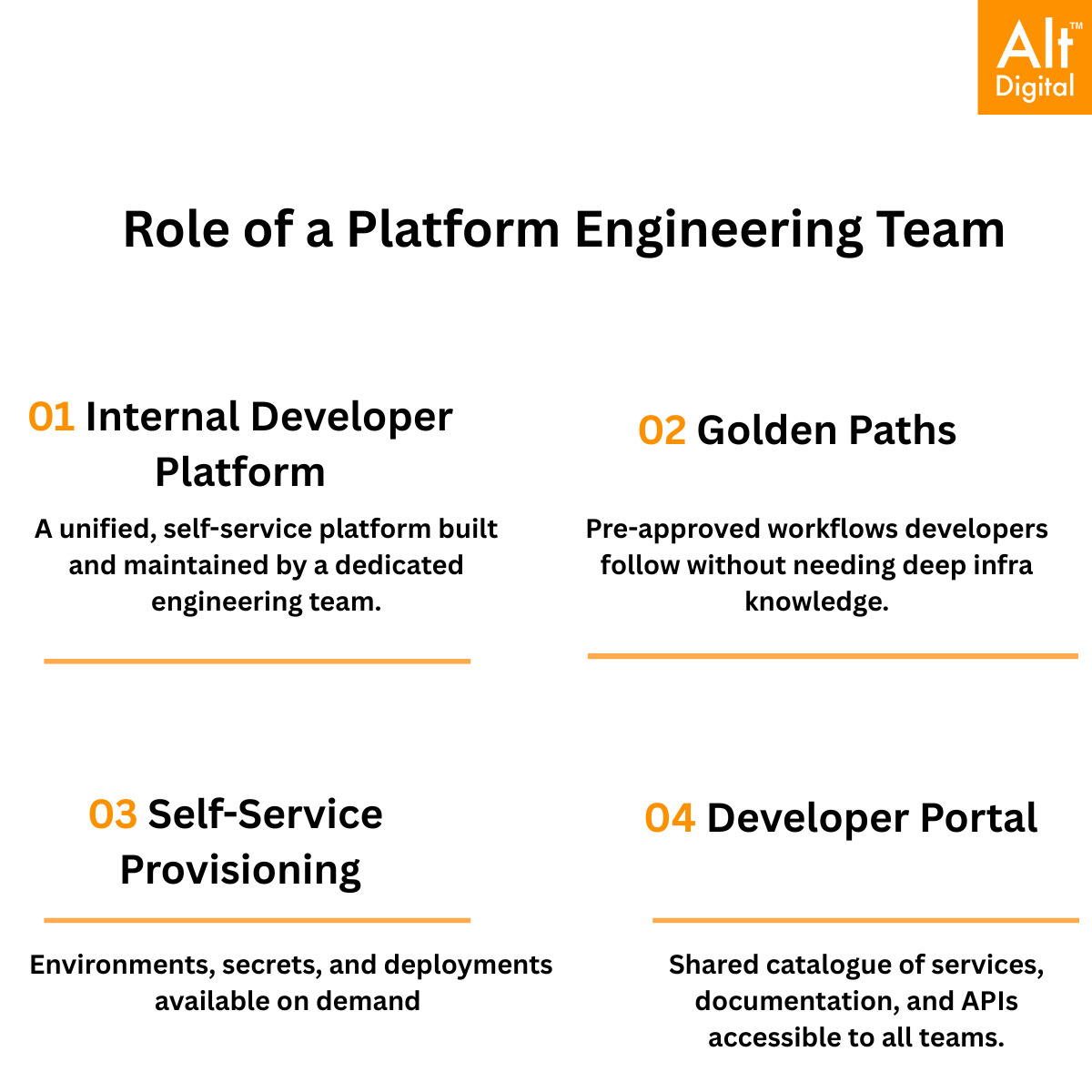
A platform engineering team usually includes infrastructure engineers, backend engineers, and sometimes product managers. They are responsible for:
Construct and develop the internal developer platform (IDP)
Creating golden paths: opinionated and pre-approved workflows that developers can follow without having to know much about the infrastructure.
Providing self-service provisioning and deployment tools for environments and secrets management
Keeping the developer portal to share services, documentation, and APIs with teams
Platform Engineering vs. DevOps: Key Differences
The honest answer is that these two things are not opposites. Platform engineering is what mature DevOps looks like at scale. But they have distinct focuses, different team structures, and different relationships with the developers who use them.
Focus and Purpose Compared
DevOps is primarily about culture and collaboration. It is a philosophy that emphasizes that development and operations must be integrated and share responsibility for the delivery, and that as much of the delivery process as possible should be automated. There is no standard team or tooling structure to go by when adopting DevOps.
Platform engineering is the operationalization of that philosophy for large organizations. It reads: we will create the infrastructure and tools once, well, we will change that to a self-service platform for all teams. It is product-thinking applied to internal infrastructure.
Impact on Developer Experience and Velocity
DevOps has made the development experience better by allowing developers to manage deployments. However, it provided a cognitive load as well: developers had to learn CI/CD pipelines, cloud configurations, security policies, and monitoring setups, in addition to their work on the product itself.
Platform engineering is about to take that burden back. It provides developers with a curated and well-documented platform, enabling them to get their applications running quickly without having to become infrastructure experts. Organizations that dedicate resources to platform engineering regularly find that onboarding time has been reduced, plus more time spent on product features and less on incidents due to configuration issues.
Tools and Technology Stack
DevOps tools tend to center on automation and delivery: GitHub Actions, GitLab CI, Jenkins, Terraform, Ansible, Datadog, PagerDuty.
Platform engineering tools are all about abstraction and self-service: Backstage for developer portals, Kubernetes for container orchestration, custom CLIs, golden path templates, and internal APIs that wrap cloud provider services.
Many of the same DevOps tools are actually being utilized by a platform team, but they've been improved to be more user-friendly for other engineers to use without having to directly interact with a platform team tool.
Real-World Example: DevOps vs. Platform Engineering in the Same Company
Imagine a company called Meridian Software with 200 engineers.
In the DevOps phase, each of the teams will have its own CI/CD pipeline. Deployments are possible, but onboarding a new service takes 3 days (copying pipeline templates from Confluence, obtaining cloud credentials from ops, etc.), and requires manual wiring of monitoring.
Once a developer adopts platform engineering, in 20 minutes, he can have a full pipeline, a staging environment, and monitoring dashboards configured and ready to go, using just one CLI command and selecting a service template. The platform team built that experience once, and now all 200 engineers benefit from it.
DevOps vs. Platform Engineering vs. SRE: What Is the Difference?
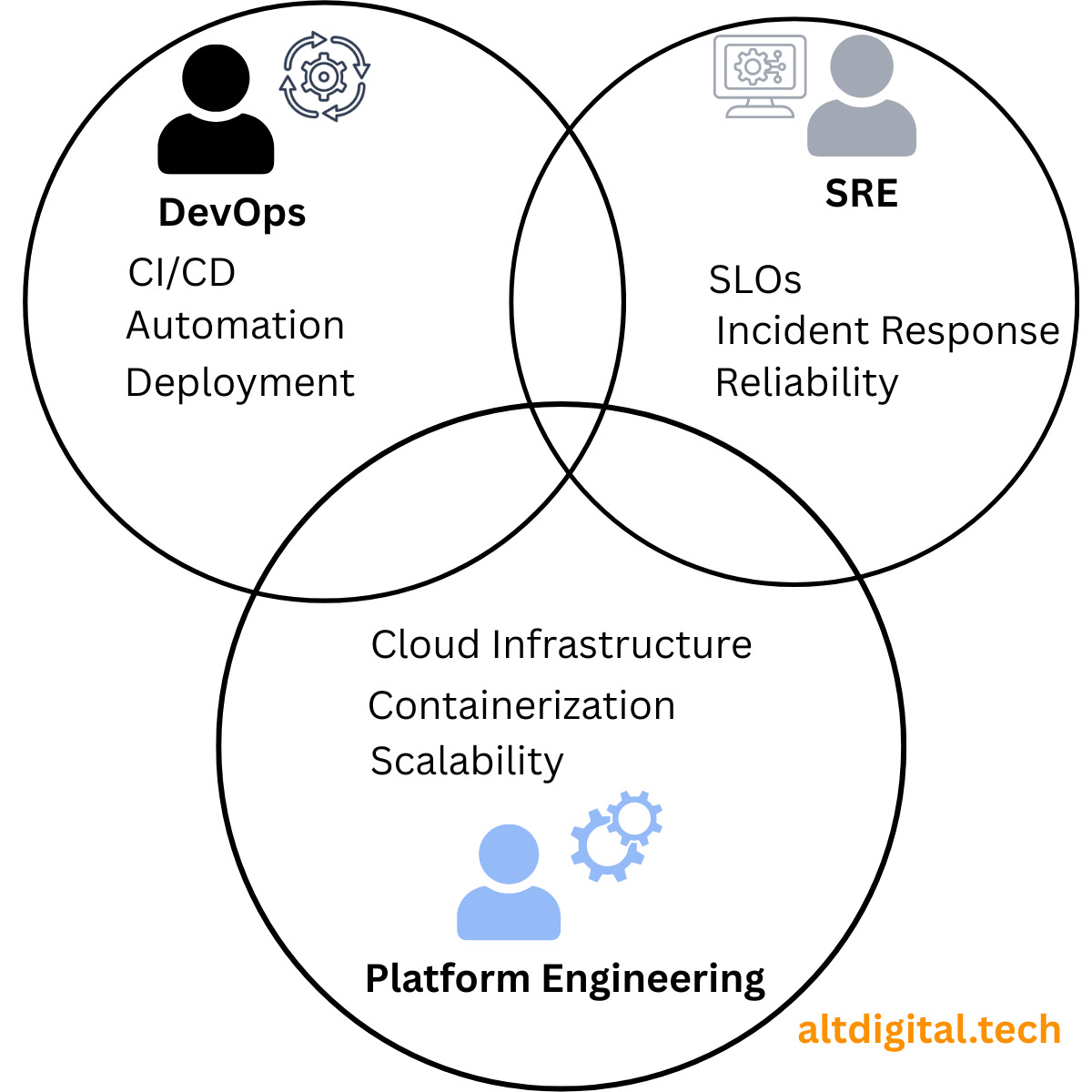
Site reliability engineering (SRE) is another role that gets mixed into this conversation. Let's look at how all three are related:
Component | DevOps | Platform Engineering | SRE |
Focus | Integrating development and operations to automate workflows. | Building internal platforms to streamline development and deployment | Applying software engineering to infrastructure and operations problems to create scalable and reliable systems |
Output | Faster delivery | Productive developers | Stable, observable systems |
Works with... | All engineering teams | Dev teams as customers | On-call and incident response |
SRE aims to maintain the reliability of systems. It applies engineering to mitigate operations issues, and it ensures it meets its own service level goals (SLOs), error budgets, and debriefs after incidents. Platform engineering and SRE are very closely related and in some companies, overlap extensively.
The 5 Core Pillars of DevOps and How Platform Engineering Addresses Each One
The five pillars that most practitioners use to describe DevOps are:
1. Culture: A successful DevOps requires clear and meaningful collaboration among the dev and ops teams and accepting failures rather than a blame game. Whereas Platform Engineering removes the hurdles that are found in DevOps and aims for quick deployments
2. Automation: Manual steps should not be needed in the context of CI/CD pipelines, infrastructure provisioning, testing, or deployment. Platform engineering scales this by automating at the platform level, so that each team gets the same level of automation, without them building it.
3. Measurement: Teams require information on what is successful and what is not. A foundation of good DevOps is based on metrics, logs, and traces. Platform engineering adds observability to the platform, and monitoring is built into each new service.
4. Sharing: Knowledge, tools, and practices should be freely shared between teams. Internal Development Platform ( IDP) lets you do that as it refers to the set of tools, workflows, and services that the platform team builds.
5. Lean thinking: platform engineering is about using Lean principles to the infrastructure: The platform team designs it, and then, over time, they improve it; each team doesn't re-invent the same wheel.
Is Platform Engineering the Next Evolution of DevOps?
Platform Engineering is certainly considered the next evolution of DevOps, but that certainly doesn't make DevOps obsolete. The core evolution will focus on enhancing DevOps principles rather than replacing them. Platform engineering would simplify the adoption of DevOps practices by providing scalable platforms with integrated tools and services.
How Platform Engineering Supports and Extends DevOps
DevOps came up with the idea of developers handling their deployments. That is possible on a platform scale. It offers the tools, templates, and guardrails that enable developers to have control over deployments without having to have a deep knowledge of the infrastructure.
Think of it this way: DevOps is the goal, platform engineering is the mechanism. They are not mutually exclusive solutions. Organizations that practice platform engineering well are still practicing DevOps, but they've created better platforms to support it.
AI and Automation in the Era of Platform Engineering.
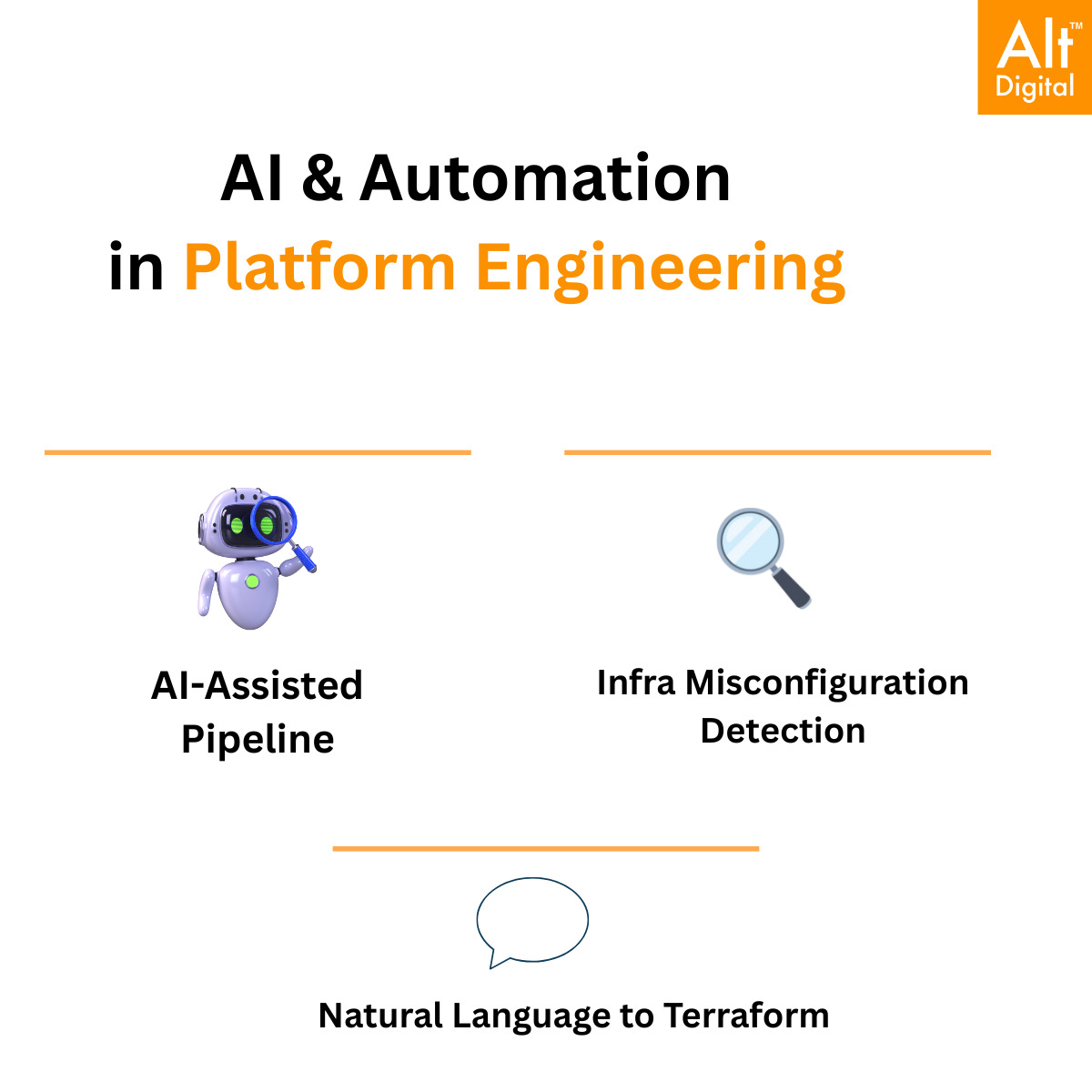
AI is changing what platform engineering looks like in 2026. AI-assisted tools now include the ability to propose pipelines, identify infrastructure misconfigurations that can trigger incidents, and auto-generate Terraform modules from natural language descriptions.
Today, the most useful applications are in developer productivity, such as AI code assistants, automated pull request reviews, and intelligent incident routing. Platform teams can integrate these capabilities into their IDPs and give developers a nice productivity boost, without forcing them to change their workflow.
When Should Your Team Adopt Platform Engineering?
Not all organizations are suitable for platform engineering. It takes work, and the pay-off is a vital part of the investment, largely based on the size of your team and how fast your team grows.
Signs Your Team Is Ready for Platform Engineering
Onboarding a new service takes more than a day
Multiple teams have conflicting and inconsistent CI/CD pipelines.
Developers spend much development time on infrastructure, not product.
Your operations team has become a bottleneck for deployments
You are growing fast, and consistency is breaking down across teams
If you are seeing two or more of these, a dedicated platform team will likely pay for itself within a few quarters.
When Pure DevOps Still Works Fine
However, if your team consists of fewer than 30 engineers, and your product surface is more linear and simple, a lean DevOps way that relies on a shared CI/CD template and some automation scripts will be better for you than setting up a full platform team. Platform engineering entails additional overheads and continual investment. The reward only becomes meaningful when it's done on a large scale.
How Alt Digital Technologies Can Help
Alt Digital Technologies works with seasoned software engineering professionals to design and implement DevOps pipelines, cloud infrastructure, and internal developer platforms that match where your organization actually is, not where a vendor wants to sell you.
Our approach starts with understanding how your teams work today. We look at deployment frequency, developer toil, onboarding time, and incident patterns. From there, we design a roadmap that gets you the most value with the least disruption.
If you are noticing the signs that your DevOps environment is becoming strained, then it's time to have a conversation with the team at Alt Digital Technologies.
Closing Thoughts
Platform engineering and DevOps are not competing ideas. DevOps gave engineering organizations a philosophy and a set of practices. Platform engineering gives them the infrastructure to apply those practices at scale, without burning out the people responsible for making it work.
Ready to evaluate your current setup? Alt Digital Technologies helps engineering teams build the right foundation for where they are headed. Get in touch with us today!
Comments
Post a Comment